The Slate Truck is an open-source pickup: you pay for what you get, nothing you don't
Most electric cars are boring. Not slow — boring. The industry has converged on one shape, one slab of touchscreen, and one software-defined personality that updates overnight and waits to be admired. The fight that used to be about how a car drives is now about how much of the car you’re allowed to use after you’ve paid for it.
Because somewhere along the way the car stopped being something you buy and became something you keep paying for. BMW spent a couple of years renting heated seats by the month before the backlash killed it off. Mercedes will sell you a yearly subscription to unlock acceleration the motor already makes. Tesla wants a five-figure fee for self-driving software that runs on hardware already bolted to the car you bought. None of it is about adding parts. The parts are already bolted in. You’re paying for permission to use what you bought.
The Slate Truck rejects that premise outright, and that alone makes it the most interesting thing coming to a driveway in years.
What “open-source OEM” means
Slate isn’t open source in any literal sense — nobody’s publishing the suspension geometry on GitHub. But it runs on the same instinct that makes me trust a soldering iron over a service plan: sell people the thing unlocked, and let them decide what it turns into.
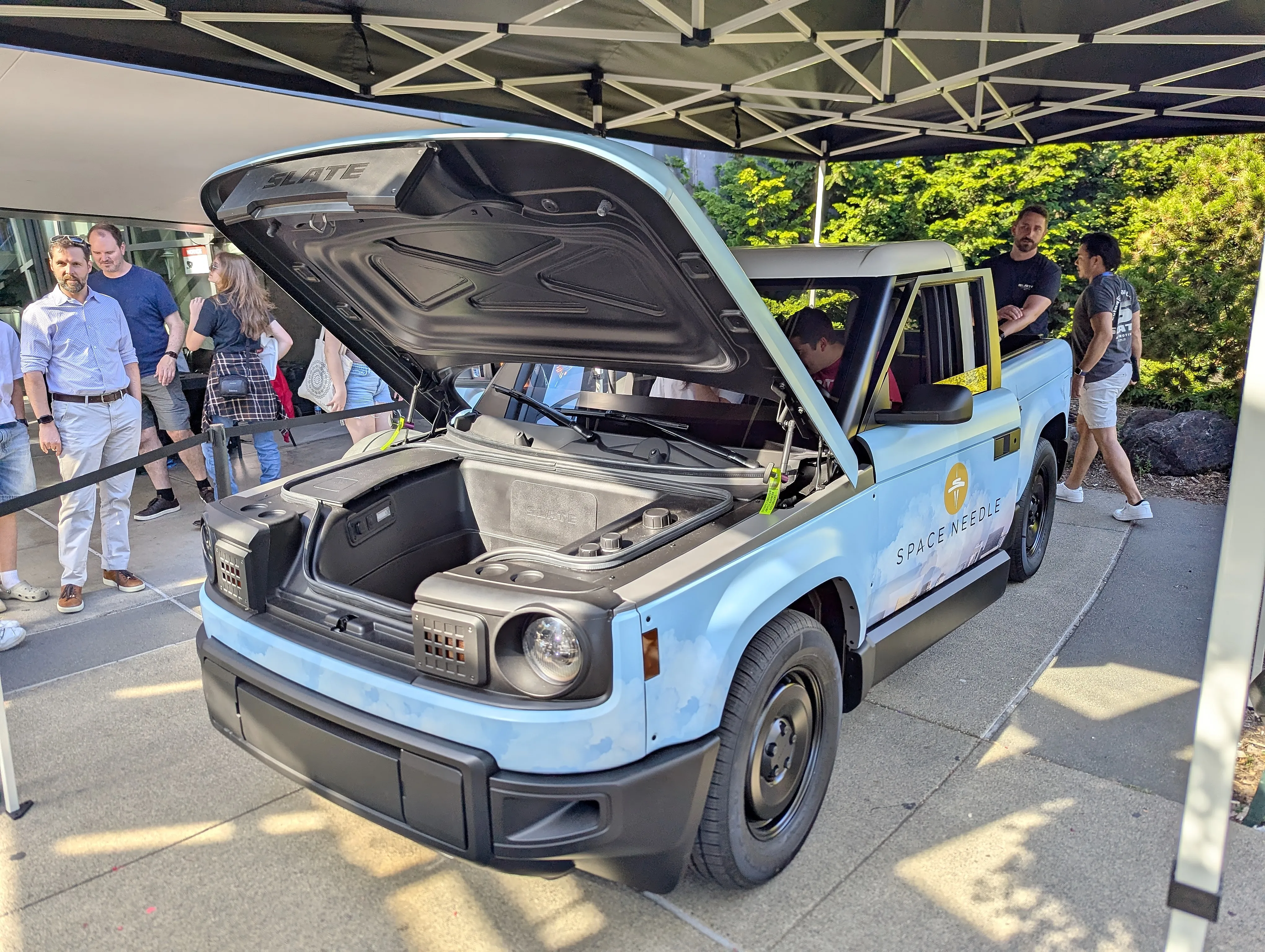
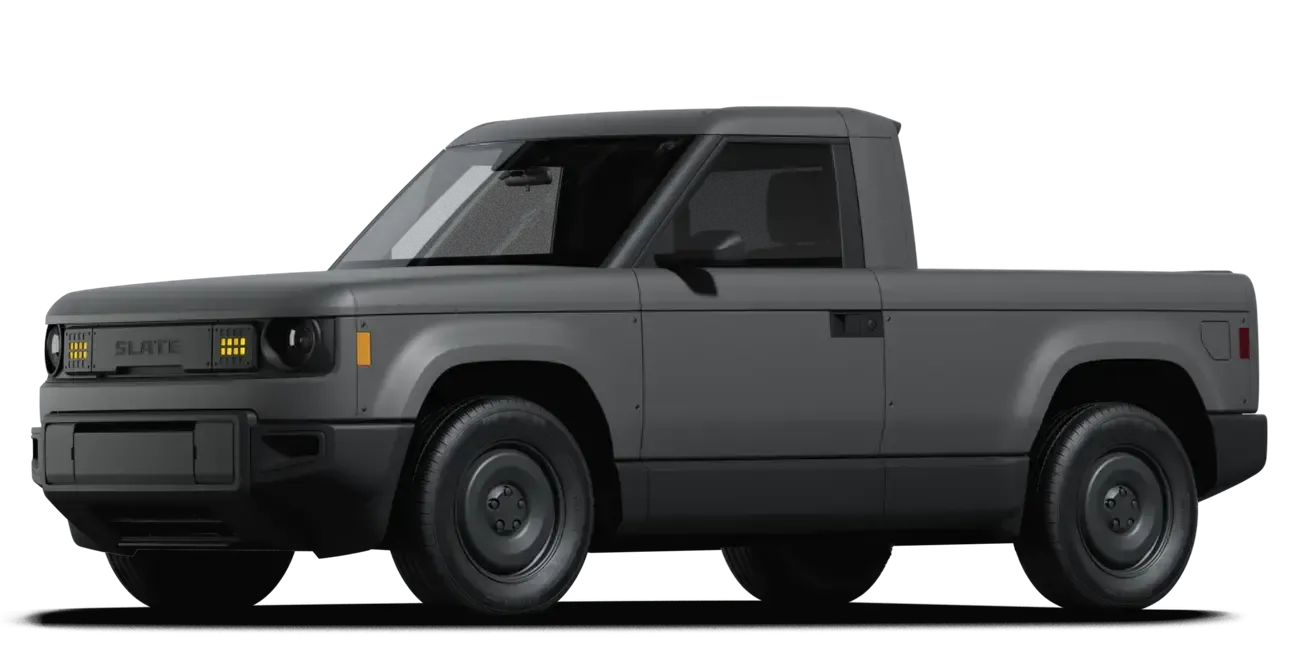
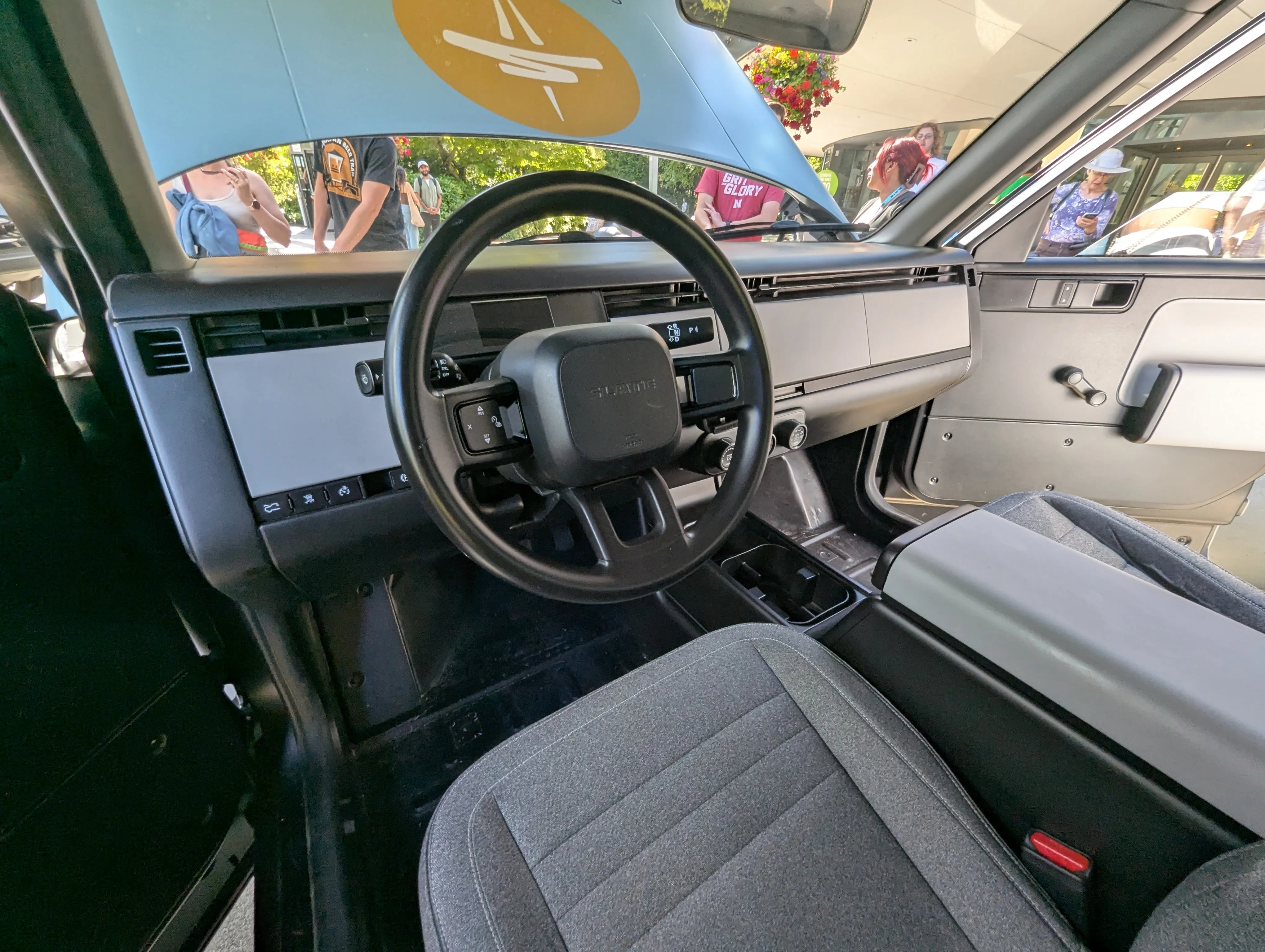
The base truck comes in somewhere around $25,000. Real pricing lands June 24, and the original pitch was under $20K before the federal tax credit went away. For the money you get a two-door pickup, a 201-hp motor on the rear axle, a 150-mile battery — 240 if you pay up for the bigger pack — and not much else. No paint — the body is raw grey composite you’re expected to wrap yourself. No center screen. Crank windows. The dash is basically a shelf where your phone goes.
On paper that sounds miserable. In practice it’s the most honest spec sheet in the segment, because every one of those blanks is a decision handed back to the owner instead of kept by the company. Slate sells the truck as a platform and everything else as accessories you add later — wraps, Bluetooth speakers, light bars, even a kit that converts the two-seat pickup into a five-seat SUV in your own driveway. You buy the part once and it’s yours, and nobody emails you when a subscription lapses.
Why a car guy cares
People who are into cars already think this way, which is why the idea lands. The cars we end up loving have almost always been platforms — the Miata, the Civic, the old Wranglers — bought cheap and honest, then made into something personal over a few years. There’s a whole culture built on starting with a decent bare base and going from there.
The modern EV largely put an end to that. A sealed battery skateboard with the throttle gated behind a software flag isn’t something you tinker with, and the manufacturer would plainly rather you didn’t open it at all. Pop the hood on most of them and you get a plastic cover and a warning sticker. Slate goes the other way. The frunk is real storage you can reach into. The body panels bolt on, so a scrape means ordering a new panel instead of booking a body shop and waiting on a paint match. The cabin is a flat dash, knobs and switches you can find without looking down, and somewhere to set your phone. None of it is waiting on you to upgrade a trim level or renew anything.
The tradeoffs
A 150-mile base range is rough, and most people are going to want the bigger battery. Living off your phone instead of a built-in screen won’t suit everyone, but most of us do this today anyway, and it’s fair to be wary of a startup promising a cheap truck — production isn’t supposed to start until late 2026, the first batches will be small and most deliveries won’t land until 2027, and “we’ll build it” stays a promise until there are trucks in driveways. The $50 reservation is refundable. The order that opens June 24 wants a $300 deposit (or $250 if you already put the $50 down), and that one is not refundable. Reserving a truck is a long way from owning one.
It’s a bet I’m willing to take. Roughly 100,000 or so people put money down in the couple of weeks after the reveal, for a grey truck with crank windows and no screen. That is a lot of buyers who are tired of paying twice for hardware they already own.
The takeaway
For a decade the EV conversation has run on range numbers and screen sizes. Slate is asking the better question: who gets to decide what your car is allowed to do? Its answer is the owner, and after years of watching the industry drift toward the manufacturer, that matters more than another inch of touchscreen. It is the rare electric vehicle that reads as a tool you own rather than a tier you rent.
If a cheap, unlocked truck is the thing you’ve been waiting for, the $50 reservation is refundable and ordering opens June 24. You can put your name down here: slate.auto/en/reserve.